

- Services
- All Services
- All Locations
- Surveying
- Drone Infrastructure Services
- Drone Services for Agriculture
- Drone Inspection for Cell Towers
- Drone Media Services
- Drone Mapping Services
- Drone Mining Inspection
- Drone for Surveillance And Security
- Industrial Robotics and Unmanned Systems
- Semiconductor Design and Innovation Services
- Factory Automation Solutions
- Portfolio
- Unmanned Products
- Drone Training
- Blog
- Brochure
- Contact us
- Services
- All Services
- All Locations
- Surveying
- Drone Infrastructure Services
- Drone Services for Agriculture
- Drone Inspection for Cell Towers
- Drone Media Services
- Drone Mapping Services
- Drone Mining Inspection
- Drone for Surveillance And Security
- Industrial Robotics and Unmanned Systems
- Semiconductor Design and Innovation Services
- Factory Automation Solutions
- Portfolio
- Unmanned Products
- Drone Training
- Blog
- Brochure
- Contact us
Drone Regulations and Compliance in 2026 Are Reshaping the UAV Industry
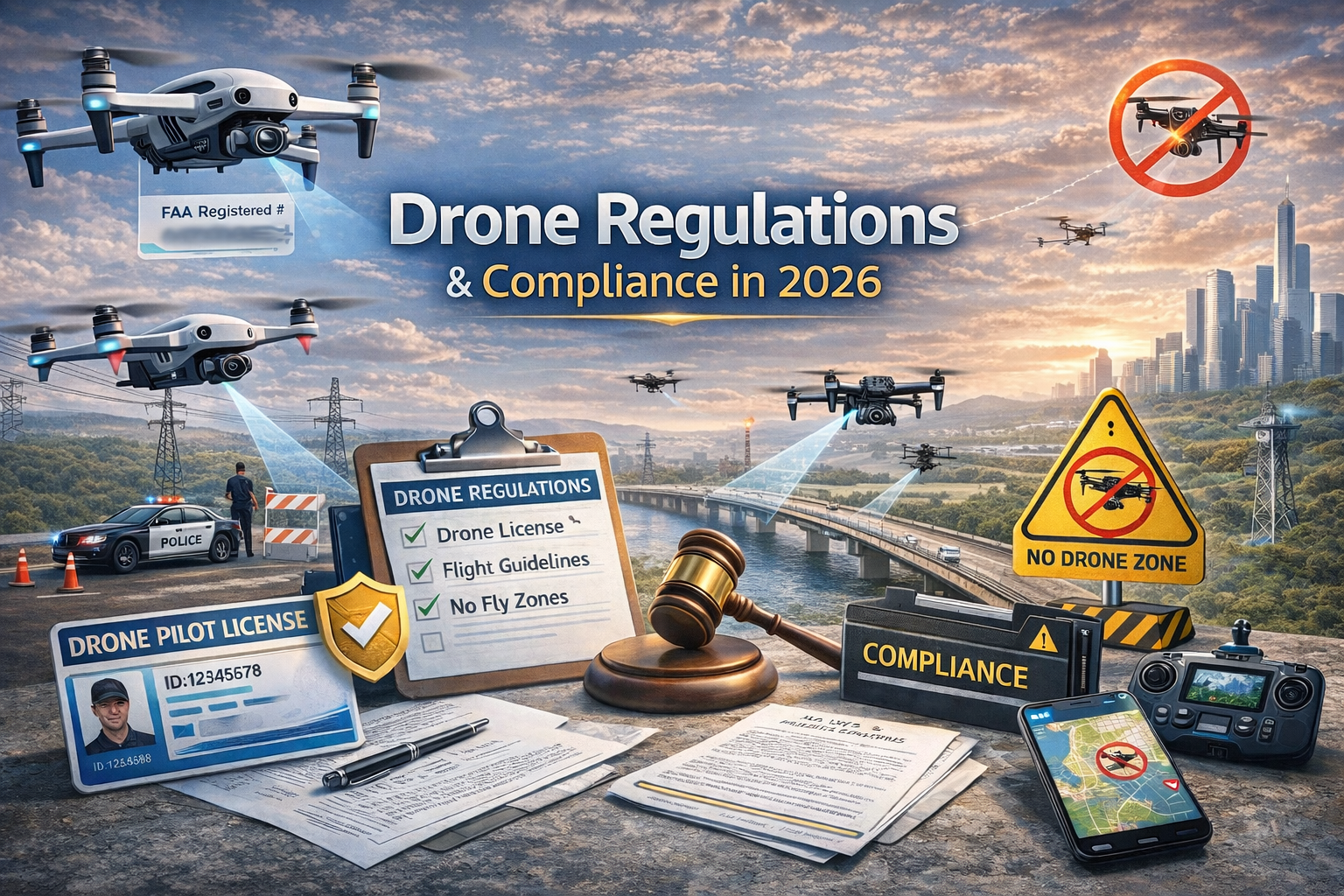
Drone regulations and compliance in 2026 are playing a crucial role in shaping how commercial and industrial drone operations are conducted worldwide. As drone technology continues to evolve, governments and aviation authorities are introducing updated policies to ensure safety, privacy, and responsible airspace management.
For drone service providers, understanding these regulations is no longer optional—it is essential for sustainable business growth. Whether operating in infrastructure inspection, surveying, agriculture, or logistics, compliance determines operational credibility and legal security.
Why Regulations Are Becoming More Structured
The rapid growth of commercial drone applications has led aviation authorities to refine policies. Drone regulations and compliance in 2026 focus on balancing innovation with public safety. With more drones sharing airspace with manned aircraft and operating over populated areas, standardized frameworks are necessary.
Regulatory updates generally address:
- Airspace classification and operational zones
- Remote identification requirements
- Pilot licensing and certification
- Data privacy and security guidelines
- Insurance and liability coverage
These structured guidelines ensure safe integration of UAVs into national airspace systems.
Key Changes in Drone Regulations and Compliance in 2026
1. Mandatory Remote ID Systems
Many countries now require drones to broadcast identification details during flight. This enhances accountability and improves airspace monitoring.
2. Expanded BVLOS Permissions
Beyond Visual Line of Sight (BVLOS) operations are becoming more common, especially for industrial inspections and long-distance surveys. However, strict approval processes remain in place under drone regulations and compliance in 2026.
3. Enhanced Pilot Certification Standards
Operators must undergo updated training programs and certification renewals to meet evolving safety standards.
4. Data Protection and Cybersecurity Requirements
As drones collect sensitive geospatial data, regulatory frameworks emphasize secure data storage and encrypted communication.
5. Integration with Smart Airspace Systems
Urban air mobility initiatives and smart city projects require drones to integrate with centralized air traffic management platforms.
Compliance Requirements for Commercial Drone Service Providers
Adhering to drone regulations and compliance in 2026 involves multiple operational responsibilities:
- Registering drones with aviation authorities
- Maintaining updated flight logs
- Conducting pre-flight risk assessments
- Ensuring proper equipment maintenance
- Obtaining necessary operational permits
- Following no-fly zone restrictions
For companies providing drone surveying, inspection, or monitoring services, compliance enhances trust with clients and regulatory bodies.
Impact on Drone-Based Surveying and Inspections
Regulatory updates directly influence industries relying on UAV technology. Drone regulations and compliance in 2026 encourage safer operations while supporting innovation in:
- Infrastructure inspections
- Pipeline monitoring
- Renewable energy surveys
- Construction site mapping
- Disaster management operations
While regulations may seem restrictive, they create a more stable environment for professional drone service providers to operate confidently.
Challenges in Adapting to New Regulations
Despite the benefits, adapting to drone regulations and compliance in 2026 can present challenges:
- Understanding frequently updated policies
- Investing in upgraded equipment
- Managing cross-border operations
- Maintaining documentation accuracy
- Training teams on regulatory best practices
Working with experienced compliance consultants and legal advisors can help businesses navigate these complexities efficiently.
Benefits of Staying Compliant
Compliance is more than avoiding penalties—it creates competitive advantages. Organizations that prioritize drone regulations and compliance benefit from:
- Improved operational credibility
- Reduced legal risks
- Easier approval for complex missions
- Stronger client confidence
- Access to advanced operational permissions
Compliance demonstrates professionalism and long-term reliability.
The Future of Drone Regulations
As drone adoption expands across industries, drone regulations and compliance in 2026 will likely evolve further. Future developments may include:
- AI-based automated airspace monitoring
- Unified global regulatory standards
- Advanced digital licensing platforms
- Expanded permissions for autonomous drone operations
Governments are expected to continue refining frameworks that encourage innovation while protecting public safety.
Conclusion
The drone industry is entering a new era of structured governance. Drone regulations and compliance are shaping safer skies and more responsible UAV operations. For commercial drone service providers, staying informed and compliant is critical for long-term success.
By understanding regulatory requirements, investing in certified training, and adopting secure operational practices, businesses can operate confidently in an increasingly regulated airspace environment.