

- Services
- All Services
- All Locations
- Surveying
- Drone Infrastructure Services
- Drone Services for Agriculture
- Drone Inspection for Cell Towers
- Drone Media Services
- Drone Mapping Services
- Drone Mining Inspection
- Drone for Surveillance And Security
- Industrial Robotics and Unmanned Systems
- Semiconductor Design and Innovation Services
- Factory Automation Solutions
- Portfolio
- Unmanned Products
- Drone Training
- Blog
- Brochure
- Contact us
- Services
- All Services
- All Locations
- Surveying
- Drone Infrastructure Services
- Drone Services for Agriculture
- Drone Inspection for Cell Towers
- Drone Media Services
- Drone Mapping Services
- Drone Mining Inspection
- Drone for Surveillance And Security
- Industrial Robotics and Unmanned Systems
- Semiconductor Design and Innovation Services
- Factory Automation Solutions
- Portfolio
- Unmanned Products
- Drone Training
- Blog
- Brochure
- Contact us
5 Ways AI-Powered Drones Are Revolutionizing Smart Factories
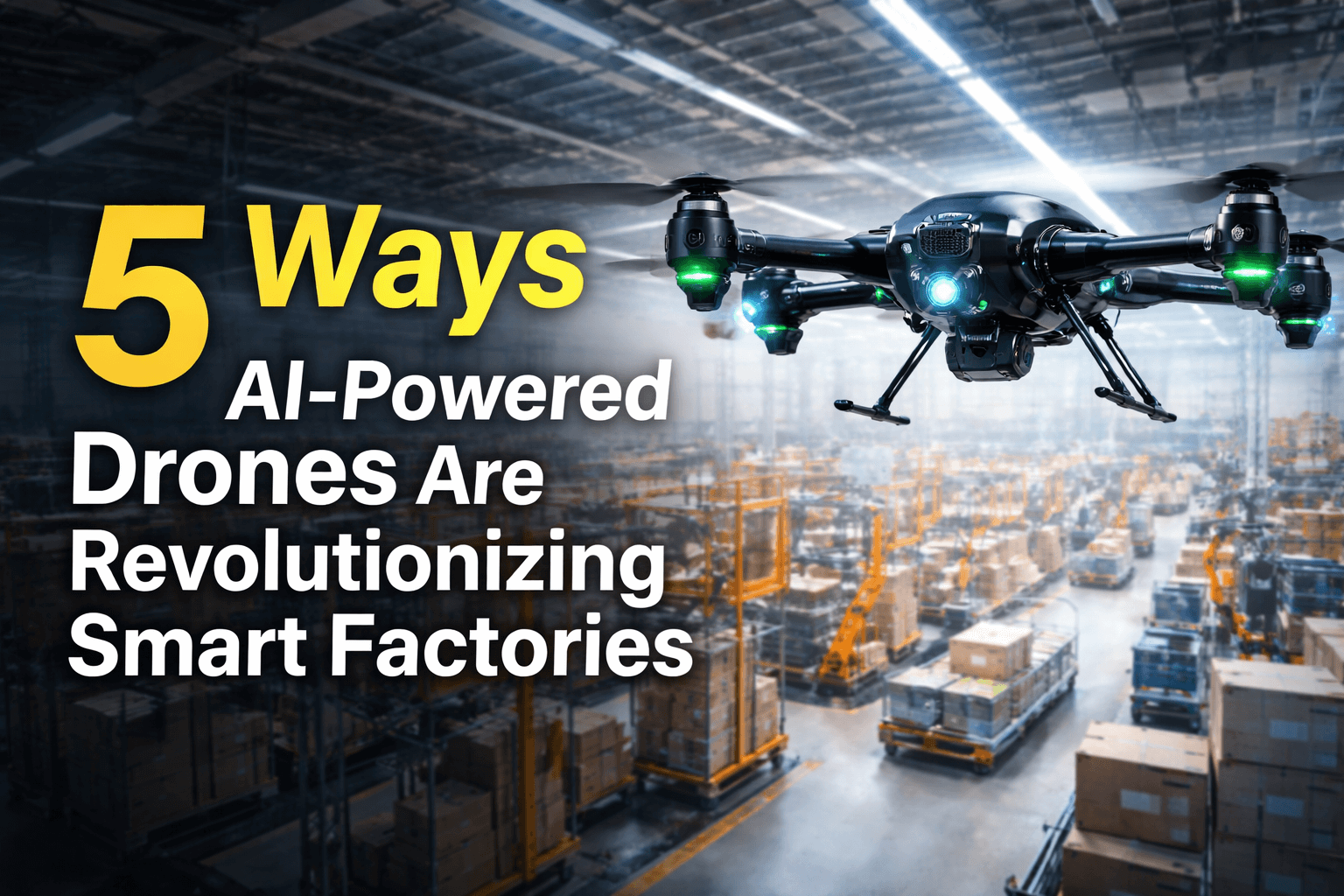
Smart factories are evolving fast, driven by Industry 4.0 technologies such as artificial intelligence, automation, and connected systems. Among these innovations, AI-powered drones are emerging as a game-changer for manufacturing and industrial operations.
By combining autonomous flight, computer vision, and AI analytics, AI-powered drones help factories improve safety, reduce downtime, and make better data-driven decisions. Below are five key ways AI-powered drones are revolutionizing smart factories.
1. AI-Powered Drones for Automated Industrial Inspections
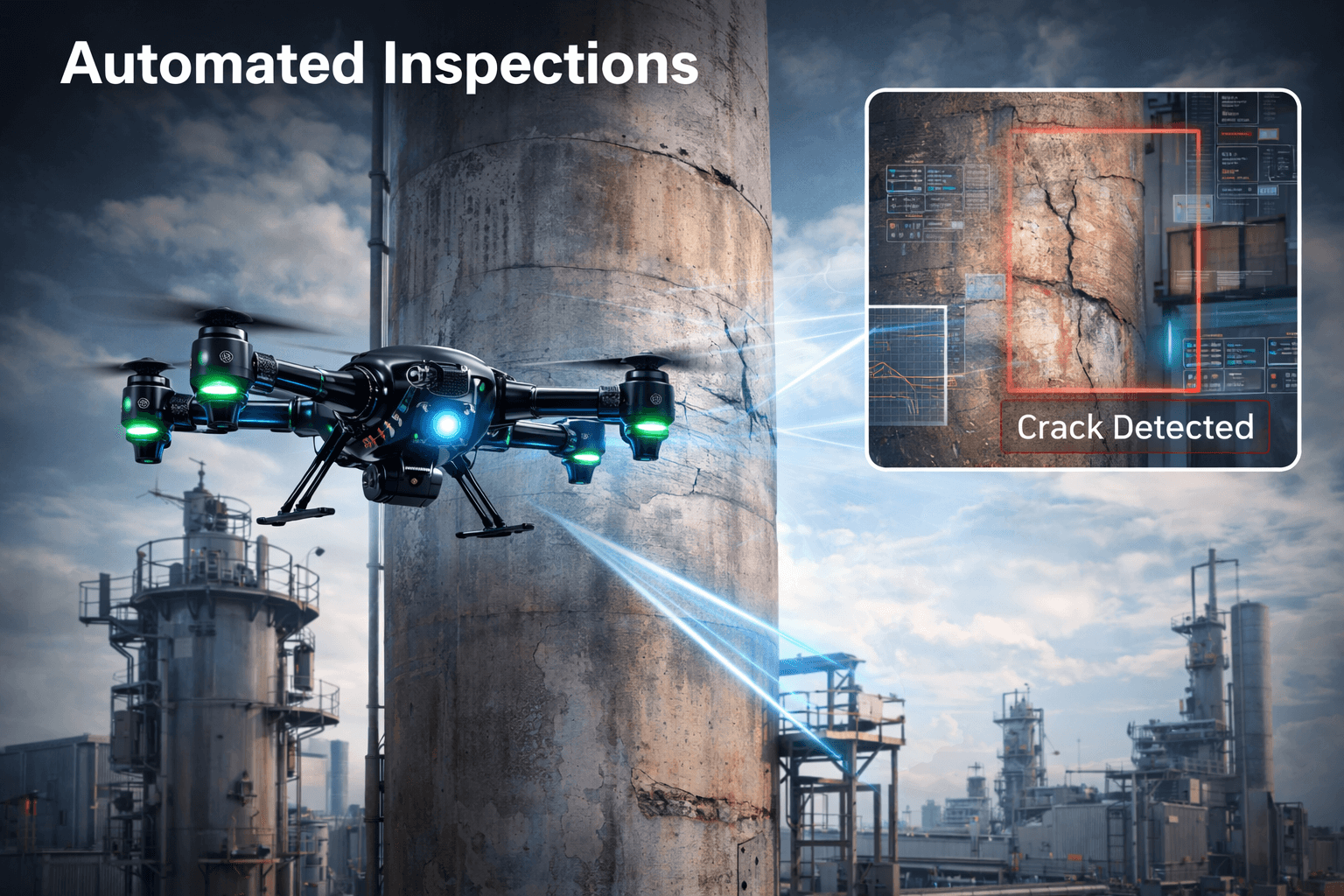
One of the biggest advantages of AI-powered drones in smart factories is automated inspection. Traditional inspections of roofs, chimneys, pipelines, storage tanks, and machinery are time-consuming and often risky for workers.
AI-powered drones can fly autonomously and capture high-resolution images and videos of hard-to-reach areas. Computer vision algorithms then analyze the data to detect cracks, corrosion, leaks, or structural damage. This allows factories to identify issues early without stopping operations or putting human inspectors at risk.
2. Predictive Maintenance .
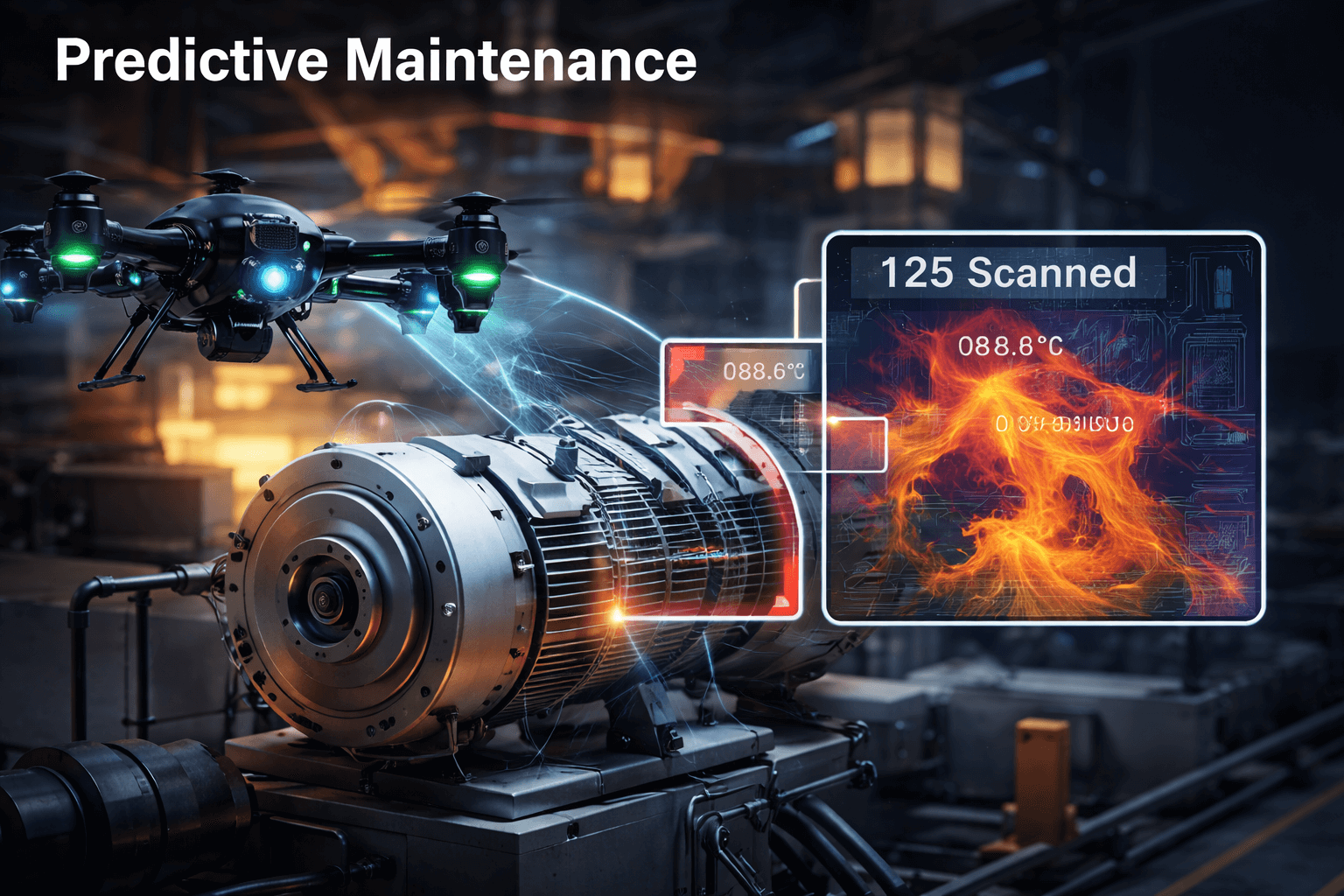
Unplanned equipment failure can cause major production losses. AI-powered drones support predictive maintenance by continuously monitoring assets using visual, thermal, and sensor data.
Thermal cameras mounted on drones detect overheating motors, electrical faults, and insulation issues. AI models analyze these patterns and predict failures before they happen. With AI-powered drones, smart factories can schedule maintenance proactively, reduce downtime, and extend the life of critical equipment.
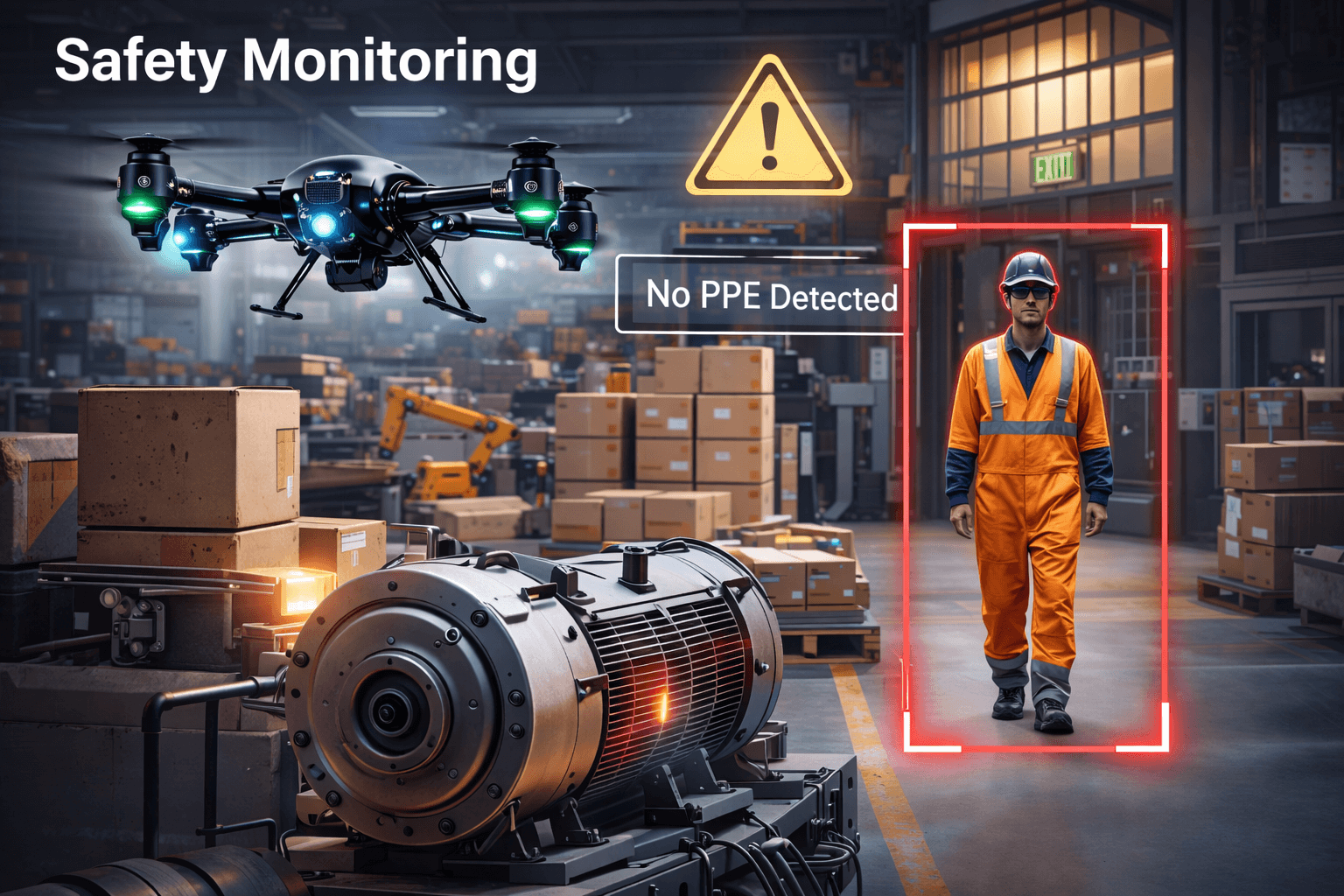
3. Enhanced Workplace Safety with AI-Powered Drones
Safety is a top priority in smart factories, especially in hazardous industrial environments and drones help improve safety by monitoring factory floors, restricted zones, and high-risk areas in real time.
Using computer vision, drones can detect unsafe behavior, missing protective gear, unauthorized access, or blocked emergency exits. By providing real-time alerts and visual evidence, AI-powered drones help factories prevent accidents and maintain compliance with safety regulations.
4. Smart Inventory & Warehouse Management
Managing inventory in large warehouses can be inefficient when done manually and drones automate inventory tracking by scanning barcodes, QR codes, and labels from the air.
Computer vision algorithms count items, verify pallet placement, and update inventory systems automatically. This reduces human error, improves accuracy, and saves time. In smart factories, AI-powered drones provide real-time visibility into stock levels and material movement.
5. Digital Twins & Data-Driven Optimization with AI-Powered Drones
Smart factories rely on data to optimize operations. Drones play a key role in creating and updating digital twins—virtual replicas of physical factory environments.
By capturing precise visual and spatial data, drones help manufacturers simulate workflows, optimize layouts, and test improvements without disrupting real operations. This data-driven approach allows smart factories to continuously improve efficiency, productivity, and resource utilization.
Conclusion: Why AI-Powered Drones Matter for Smart Factories
AI-powered drones are no longer experimental technology. They are becoming an essential part of modern smart factories. From inspections and maintenance to safety and optimization, drones bring speed, accuracy, and intelligence to industrial environments.
Manufacturers that adopt AI-powered drones gain a competitive advantage through improved efficiency, reduced risk, and smarter decision-making. As Industry 4.0 continues to evolve, AI-powered drones will play an increasingly important role in the future of manufacturing.